From Gas Works Park, you can watch jets descend to SeaTac in a steady stream, one every minute or two. I’ve lived in various neighborhoods in Seattle, all under this corridor – SLU, Eastlake, Fremont. I didn’t think much of this fact until fairly recently, when I started taking flight lessons and becoming generally more actively interested in aviation.
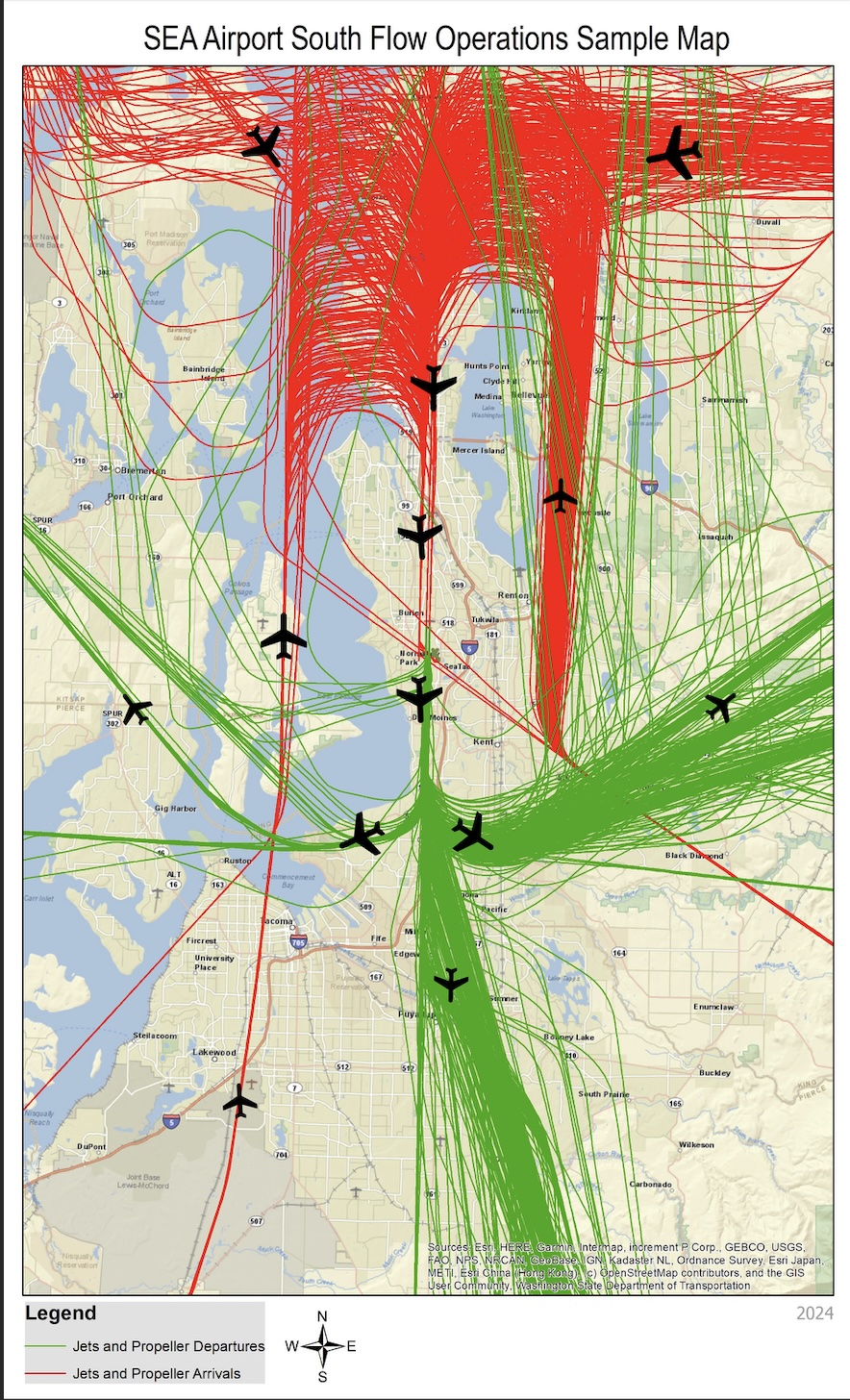
The South Flow SeaTac Arrival Corridor; Red indicates arrivals
As I write this, I have FlightRadar24 popped open and can see a dozen or so jets in or entering this funnel. Planes enter the approach north of Seattle around Lynnwood or Shoreline, hug I-5 south, passing Green Lake and Lake Union, eventually descending through South Seattle into their SeaTac landing. There’s something comfortingly mechanical about this rhythm.
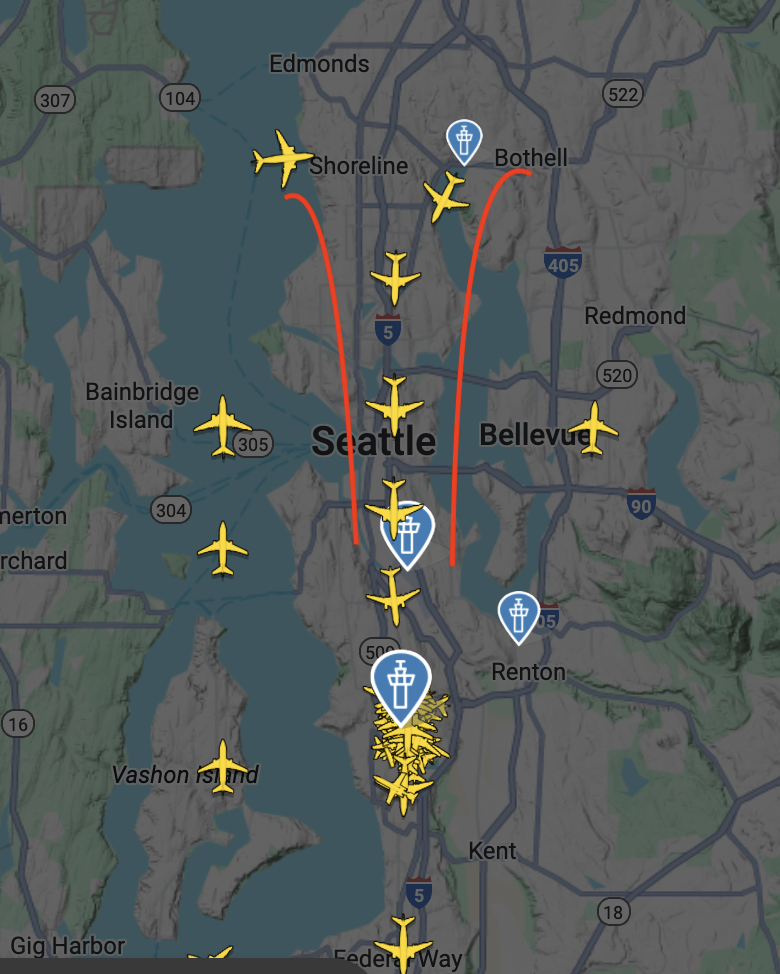
FlightRadar24 snapshot of the arrival corridor
Of course, depending on the wind, SeaTac can also flip to a “north flow” pattern where the funnel over Green Lake becomes the departure direction instead of the arrival, but the south flow is used about two-thirds of the time.
It’s also notable how entirely non-dramatic this routine is. Even in the foggy soup of Seattle clouds, the rain, negligible visibility, SeaTac continues to operate. I’m still quite early in my private pilot training and haven’t touched instrument flying yet, but I have a fledgling appreciation for what makes this possible: procedures, precision instruments, and skilled piloting. The fact that you can fly through the clouds and only see the runway a few hundred feet before landing (safely, of course) is an impressive feat of engineering and aviating.
I’ve now been thinking of this arrival corridor as one of my favorite landmarks of Seattle. It’s “invisible” and it’s undoubtedly less of a recognizable landmark than either of the floating bridges, the canal bridges, or any of Seattle’s other notable infrastructure landmarks. But nonetheless, I think about it nearly every day – whether it be on a run, driving to work, or just in hearing the quiet hum of a plane flying overhead.